- Home
- Faye Schulman Art
Holocaust Survivor Art
(My Mom's Paintings)
What this Gallery Is
Here is a collection of original paintings by my mom. She painted these after we arrived in Canada. I've divided this collection into 3 Acts. The first act has paintings that reflect life before WWII. The second Act reflects her life during the war. And finally the third act reflects her life after the war, in Canada.
First a Brief Note:
To capture the truest colors of my mother's work, many of these pieces were photographed in natural morning light. Also, some watercolors are shown without their protective glass, allowing the viewer to see the incredible depth of pigment and the textured paper my mother chose to bring these memories to life.
Act I: The Landscape of Memory
Before the darkness of the war, there was a world of vibrant culture and domestic peace. These works serve as a visual reclamation of my mother’s roots, capturing the architectural details of her childhood home and the enduring spirit of the traditions she carried with her.
A Sanctuary Reclaimed

In this serene watercolor, my mother captures a cluster of rustic buildings nestled among a mix of evergreen and autumn-colored trees. The composition centers on a large, sturdy barn-like structure with a ladder leaning against the rooftop—a detail suggesting a place of activity and life. This piece serves as a visual "map" of her past; the attached barn is characteristic of rural Eastern European architecture. It captures the memory of sanctuary—the home that was—before the world was upended.
The Song of the Shtetl
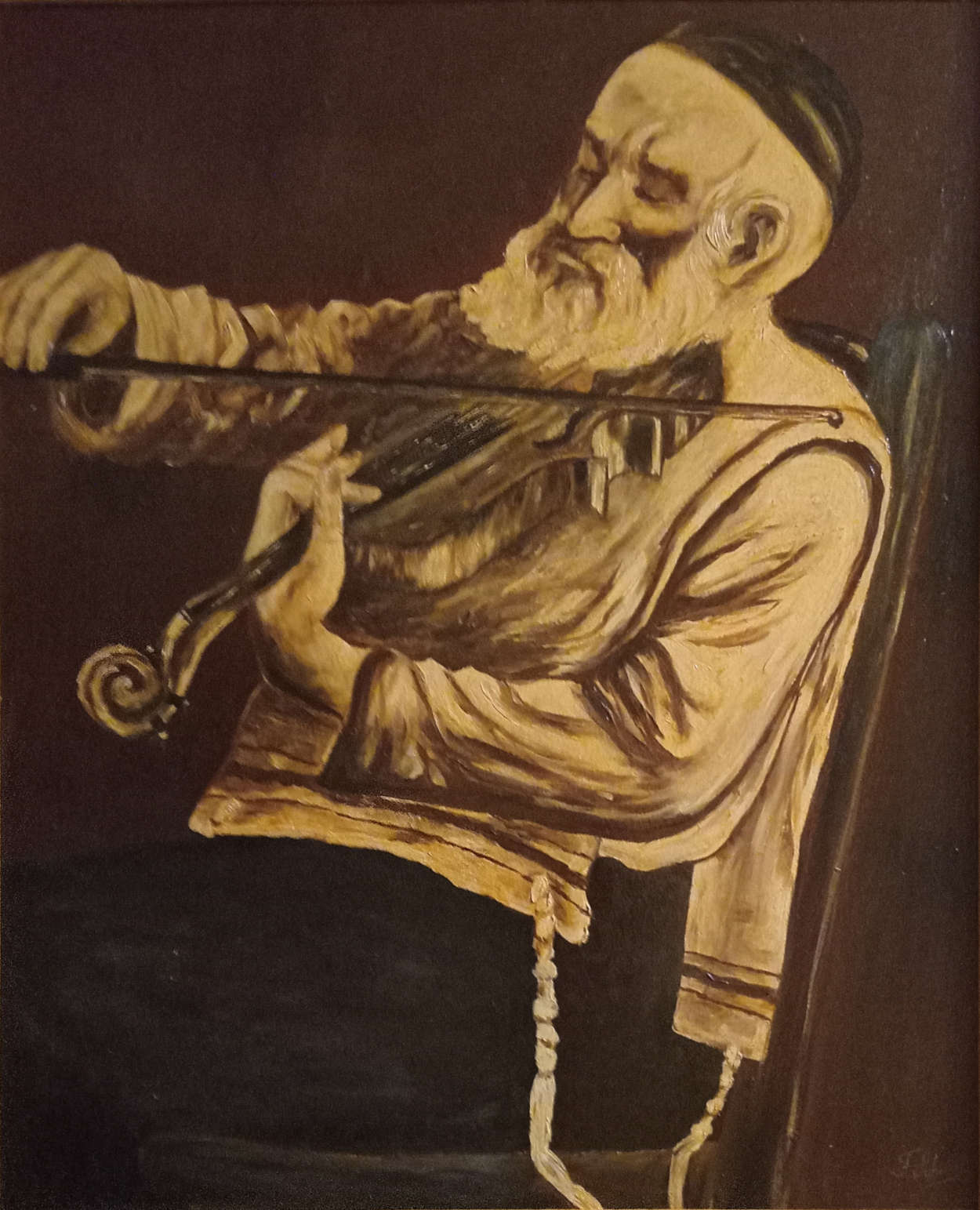
This oil painting of the old man wearing a Talit and a prayer shawl, playing the violin is one of my absolute favourites. It captures the heartbeat of Eastern European Jewish culture. The violin sang at weddings and mourned at funerals.
By painting this musician, my mother wasn't just capturing a figure; she was preserving the melody of her heritage. The bold oil strokes give the player a sense of life and resonance, as if the music is still echoing from a world that refused to be silenced.
The Dance of Life
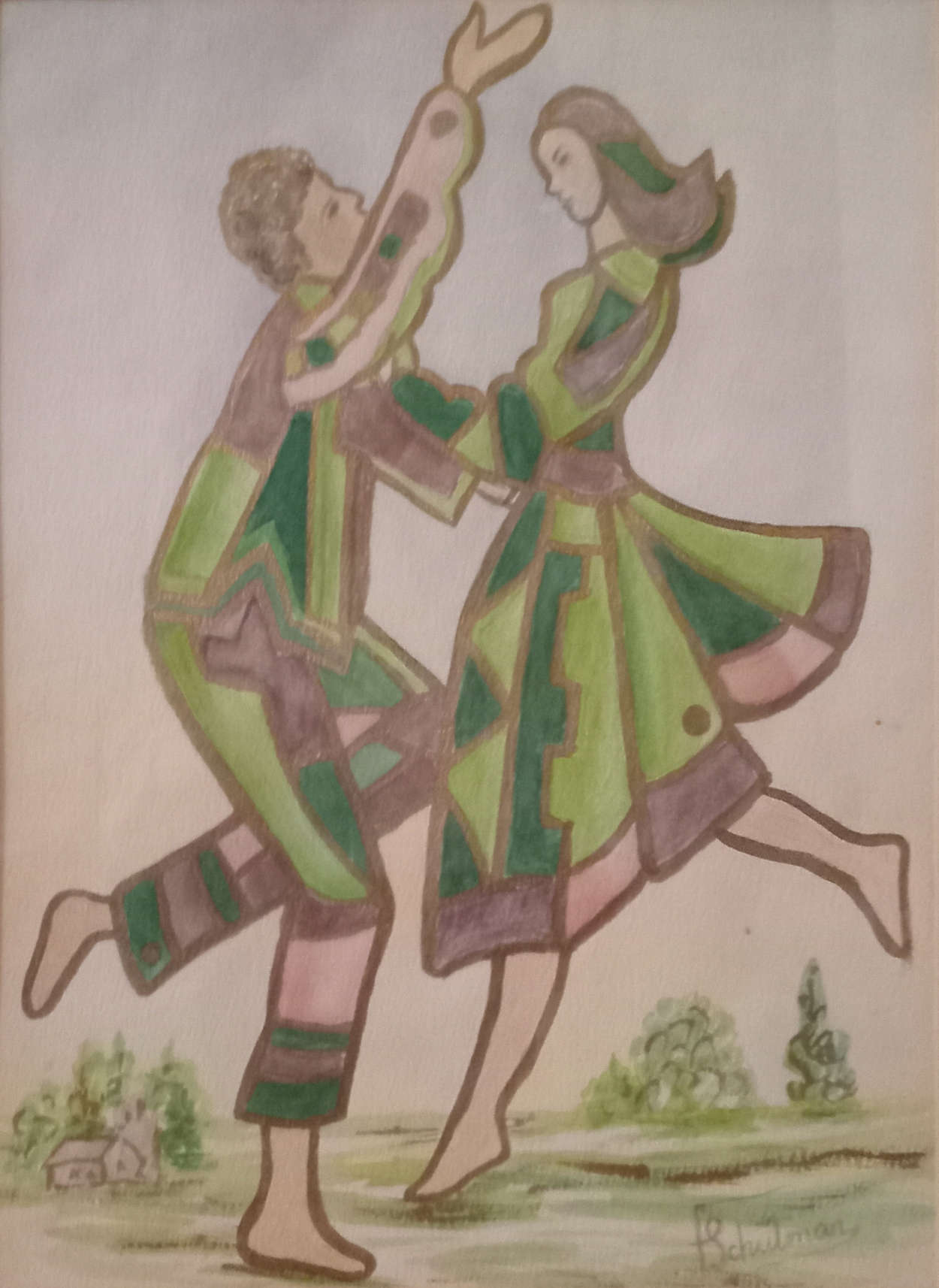
While many of my mom's works explore solitude, this painting is a joyous explosion of movement. It depicts a young man and woman in traditional folk dress, caught in a spirited dance. If you look closely at the bottom left corner, you will see a tiny representation of the same farmhouse and barn from her other works. This anchors the dance to her home, celebrating the vibrant Jewish life and soul of a people that the war sought to extinguish.
Act II: The Quiet Witness
The forest was my mother’s sanctuary and her battlefield. In these landscapes, she uses the natural world—the starkness of winter and the protective shadows like a fence—to process the cold realities of survival and the defiant light of resilience that never truly went out.
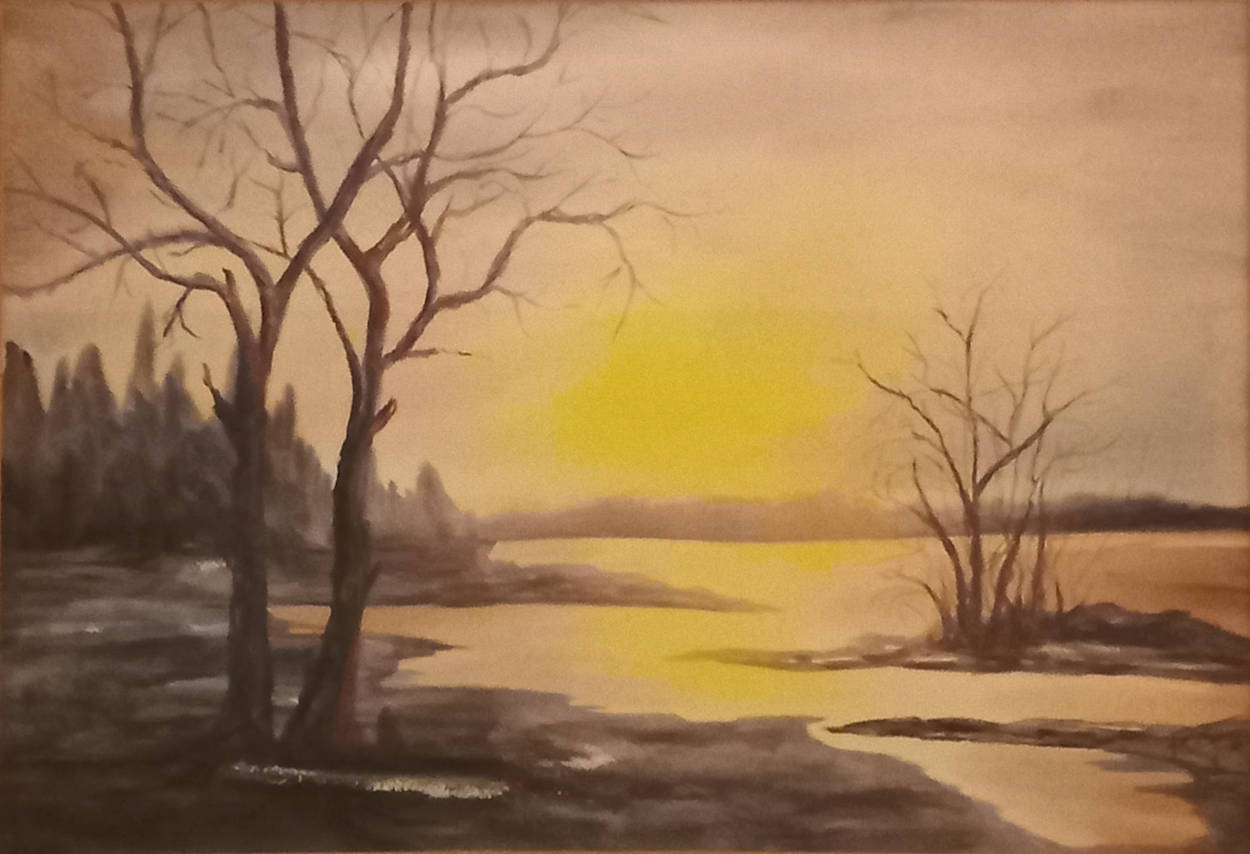
The Silent Watch
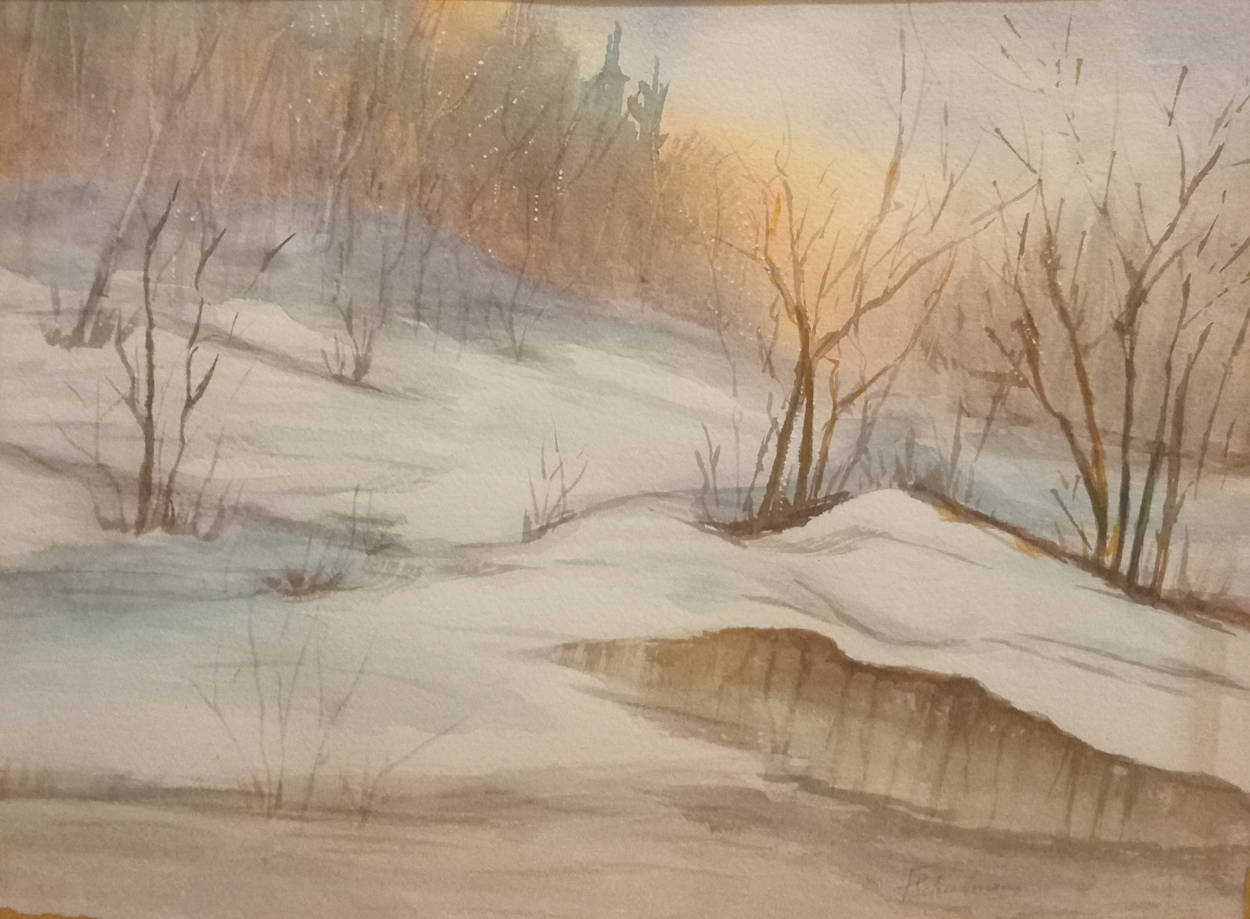
This watercolor captures the chilling beauty of a forest in winter. For a partisan, winter was a season of extreme hardship—cold, hunger, and the danger of leaving tracks in the snow. The soft, muted tones create a sense of profound silence. The trees stand like sentinels in the deep snow, capturing the quiet endurance required to survive when the world itself turns cold.
Trees Stand Tall and Firm
Daisies at the Barrier
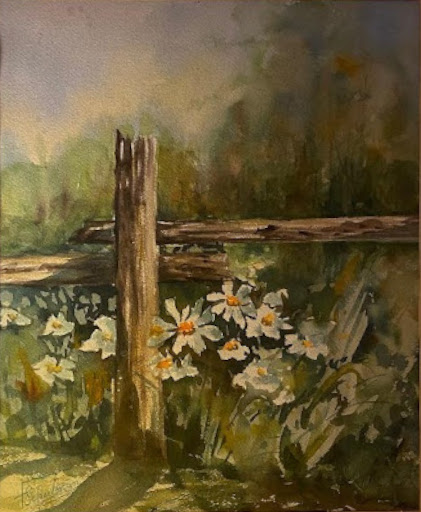
In this watercolour, a cluster of bright white daisies grows against a darker, structured fence. Notice that the daisies are looking away from the sun. You can tell by where the shadow of the post is. Normally, flowers look towards the sun. But for these daisies, freedom is the most important. The flowers do not just exist; they lean toward the outside. thriving despite the obstacles placed in their path. I wonder if my mom even realized this when she painted it.
Renewal and the Future
The ultimate victory of a survivor is the ability to create joy for others. These final pieces represent a transition into a world of whimsy and deep maternal love, where the boundaries of the past are broken and the focus shifts toward nurturing the next generation.
Act III
A Mother’s Shelter
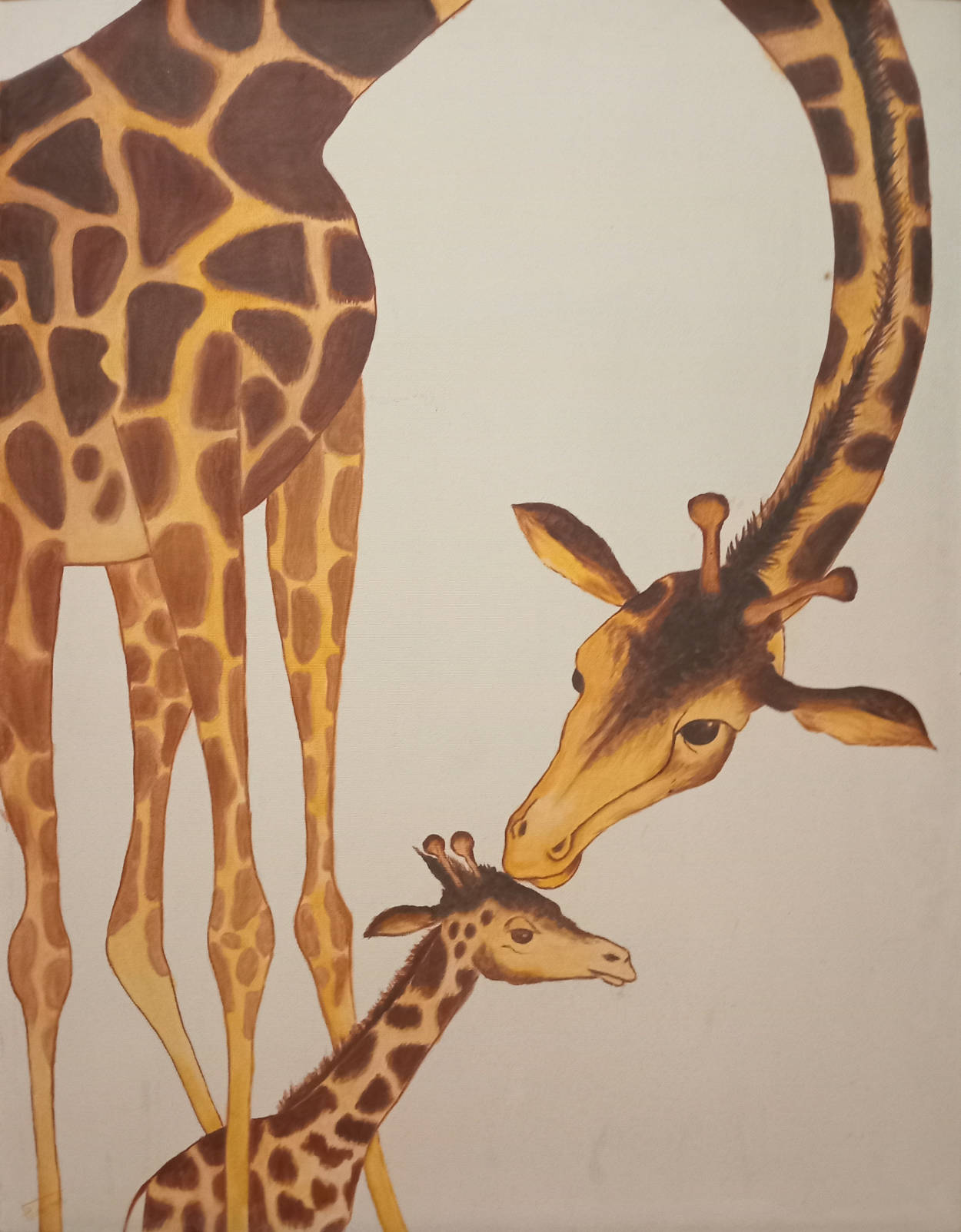
The picture above was painted as a gift for Faye's grandson’s nursery when he was little, This piece marks a departure into bold, warm colors. The mother giraffe and her baby calf represent the ultimate theme of protection and the continuation of family. For me, it's a "victory painting" - a testament to the fact that after surviving the forest, she went on to build a family filled with love, color, and peace.
Flight to Freedom
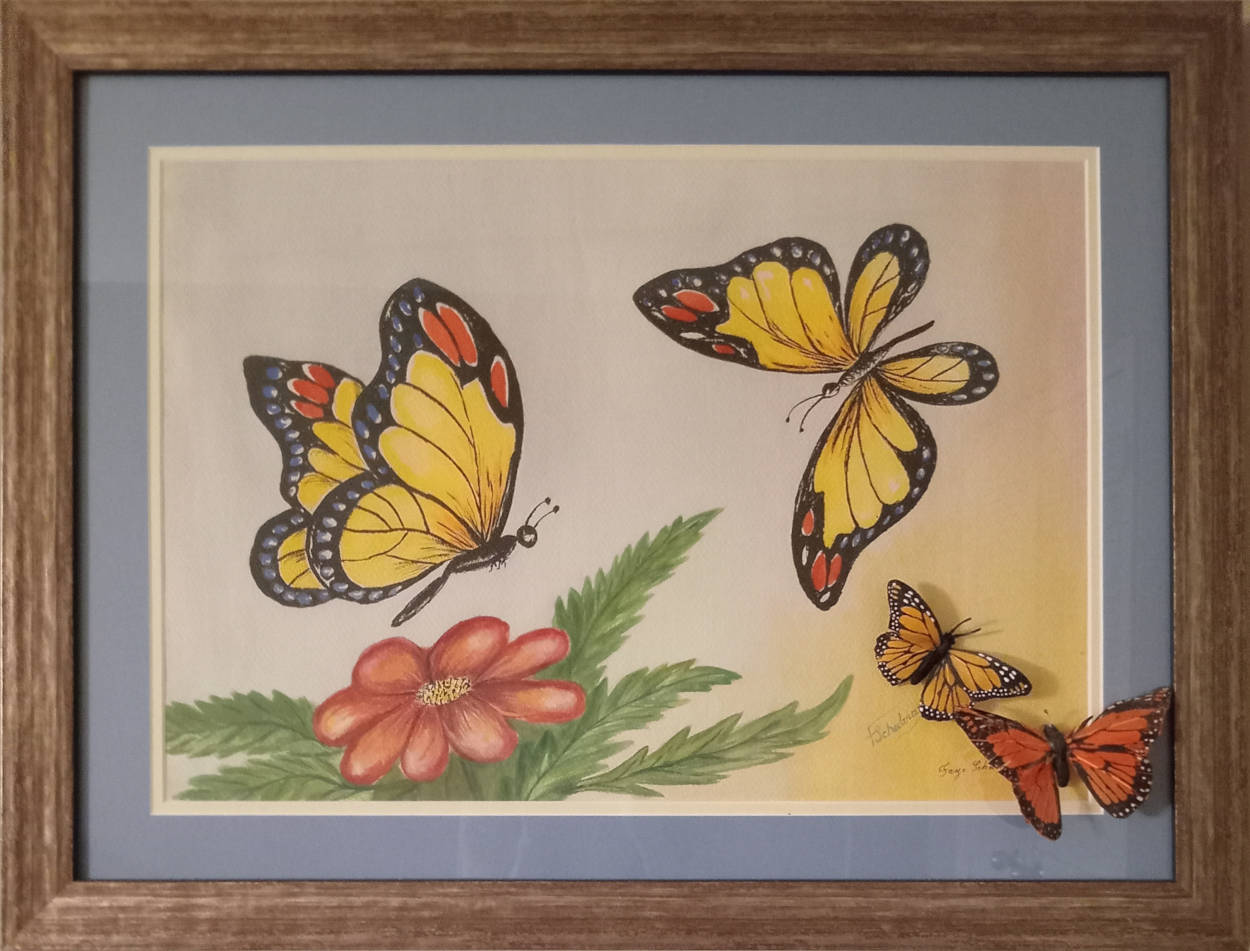
This vibrant watercolour work of butterflies over a red flower is unique for its three-dimensional elements. My mother glued two delicate silk butterflies directly onto the glass which covers the painting. How clever of her!
In Holocaust survivor art, the butterfly is a powerful symbol of the soul and transformation. By physically placing the butterflies outside the confines of the two-dimensional paper, she makes a statement about breaking free from limitations and the fragile beauty of freedom.
The Palm Tree: Renewal and the Future
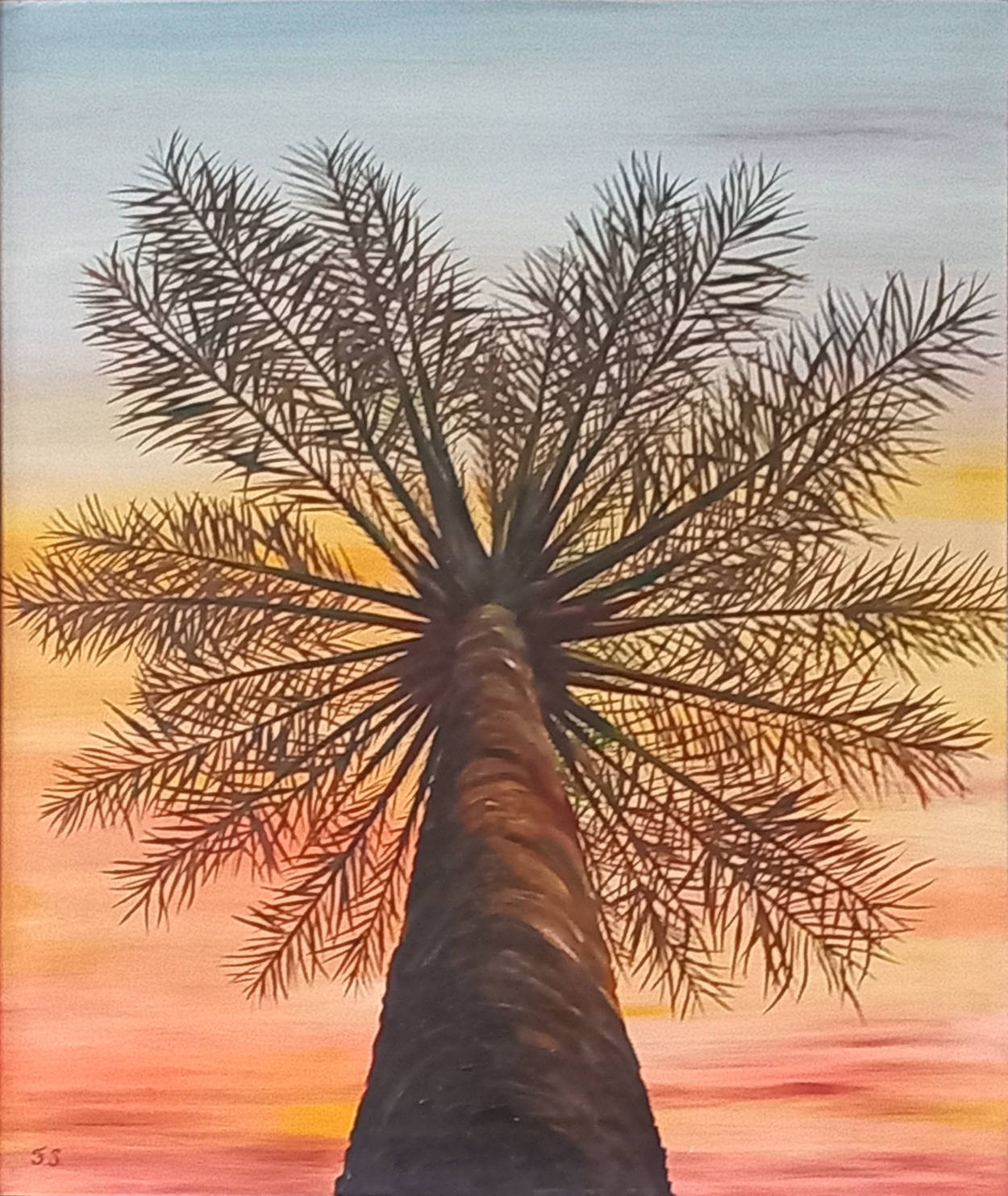
A stark and beautiful contrast to the winter forests of her Partisan years, this palm tree represents the "after." I wonder if it was inspired by her travels, or whether simply a dream of a sun-drenched future.
The palm is a universal symbol of peace and victory. For my mom, it marks a moment her brush moved away from the cold shadows of the past and into the bright, warm light of a new world.
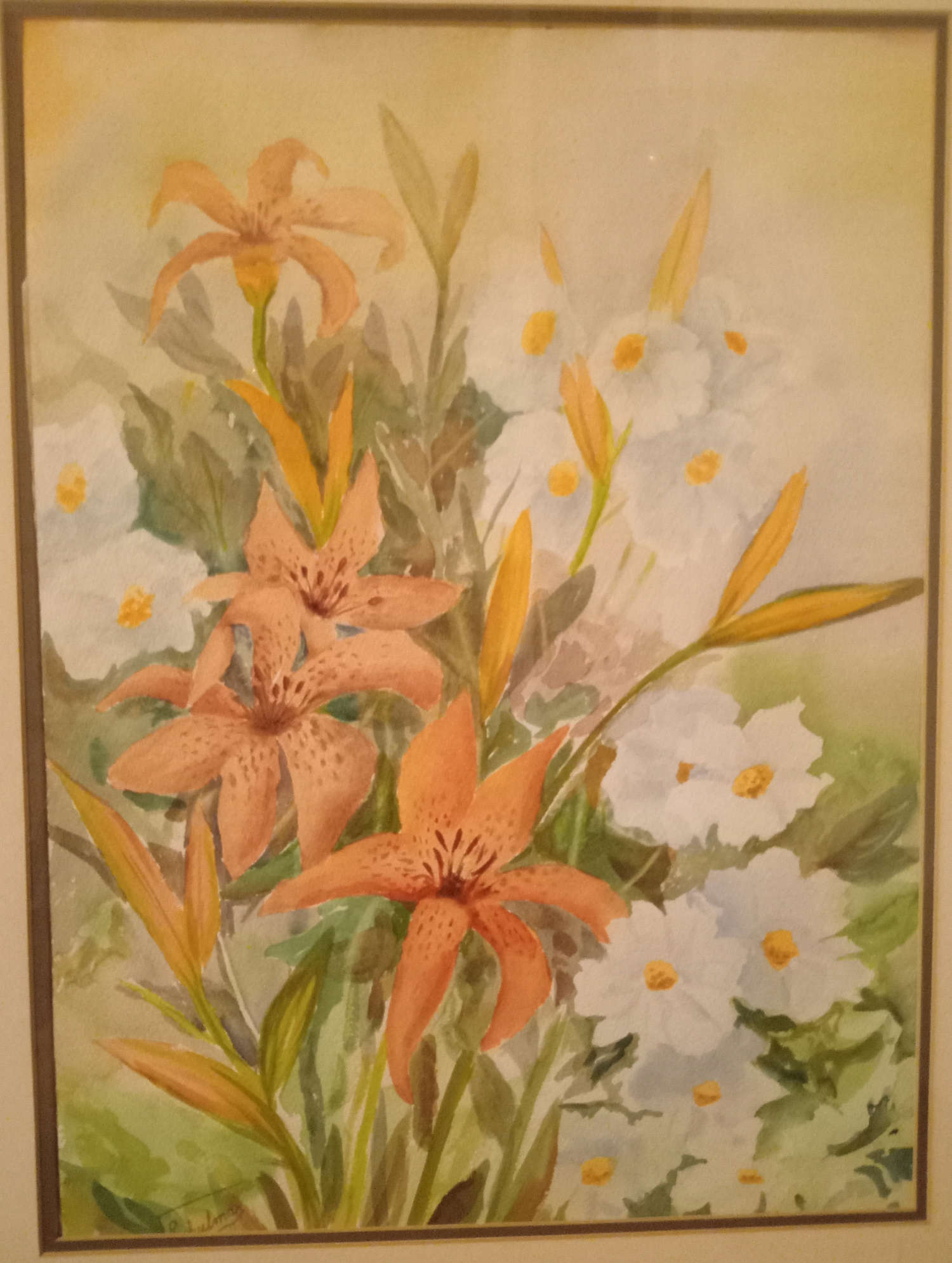
Here is my Mom’s original watercolor painting of Daffodils. She had a wonderful way of bringing the garden indoors through her art.
The Brush and the Soul
While Faye Schulman’s camera provided the world with an unflinching record of history, her paintings provided her with a sanctuary. Through these watercolors and oils, she was able, in a way, to rebuild what had been lost.
She was able to bear witness to the shadows of the forest, and ultimately, celebrate the vibrant colors of a life renewed.
These ten works represent more than just a creative hobby; they are a visual testament to a "quiet passion" that sustained her. They remind us that survival is not just about staying alive - it is about the courage to keep creating beauty, to keep dreaming of horizons, and ensuring that the melodies of the past are never truly silenced.
This gallery was lovingly curated by Faye’s daughter. To learn more about my journey in preserving my mother's legacy and the story behind this site, please visit my About Me page.